
(This is my nineteenth post in a series of entries I’m using to participate in Blaugust for 2026.)
It has been said that every hobby is a bottomless pit that one tries to fill with money, and there’s some truth to that. Even one of my favorite hobbies, Tabletop Role-playing Games, can be done with virtually no overhead using free rules and a dice rolling app on your phone, but don’t ask how much I spent on TTRPGs last year.
The saying seems particularly true for photography, to the point where Leonard Skapp has a whole article over on DIY Photography on how we got here and what we can do about it.
(Spoiler: Part of the problem is AI. Shocker, I know.)
I’m going to skip all of the reasons (Leonard Skapp does a thorough job, there), but suffice to say I’ve had a need for getting inexpensive cameras more often than most people.
As a digital media teacher I have the additional problem of not needing merely one camera, but enough so that students don’t need to share too much.
And then of course there’s students who want to take photos at home, because they actively enjoy the subject. They aren’t all independently wealthy, so how are they going to manage that?
Thrifting can be another bottomless pit hobby, and I’ve lost a few Saturday mornings learning this. It isn’t something I recommend (at least the way most people do it) because you’re going to use a lot of time and gas going from store to store for not a lot of reward. In this economy, you’ll burn all of your savings away on fuel costs.
As the gentleman behind the Farming While Beige YouTube Channel has pointed out on occasion, people who are strapped for cash are going to be working instead of using up their time trying to find the best deals.
The Simplest Solution
So here’s the baseline: If you have a phone with a camera, you don’t have to spend a dime. You can start taking photos now.
That’s it. There’s no price point that’s a minimum entry fee to become a photographer. If you take photos, you are one, and gatekeepers don’t get a say unless they’re drawing the line at AI use.
… Hm. You’re still here.
You probably want something more involved than a phone, then.
Bridging The Gap (Do you see what I did, there?)
OK, next step up from a phone is going to be a bridge camera. These are seen as the “in-between” models that bridge the gap (hence the name) between the more simplistic compact cameras and the more advanced DSLRs and mirrorless models.
If it looks like the lens isn’t detachable but the form factor won’t fit in your pocket, it’s a bridge camera.
They’re supposed to be priced between them, also, but with the high demand for “vintage” compacts and DSLRs being DSLRs, the prices for used bridge cameras are remarkably affordable.
Quick And Cheap: KEH
The first place I’d suggest trying is KEH.com. It’s not where I go, but I’m comfortable absorbing a little risk so that’ll be the next option further down.
KEH has a decent selection of compact and bridge cameras, though the cheapest cameras I’d say are “bridge” are included in their “compact” section. Remember to sort by “Ascending” price or you’re going to get some sticker shock.
A nice thing about this vendor is they also do repair work. If you’re buying something from them, it should darned well work.
Slower, But Possibly Cheaper: ShopGoodwill.com
If you’re looking for even cheaper prices but you’re willing to take on some risks, Go to ShopGoodwill.com’s camera section.
ShopGoodwill.com is nice because it’s like Ebay, but all of the sellers are Goodwill stores based around the US. I’ve been burned exactly once by a fraudulent listing on Ebay, that’s never happened with Goodwill.
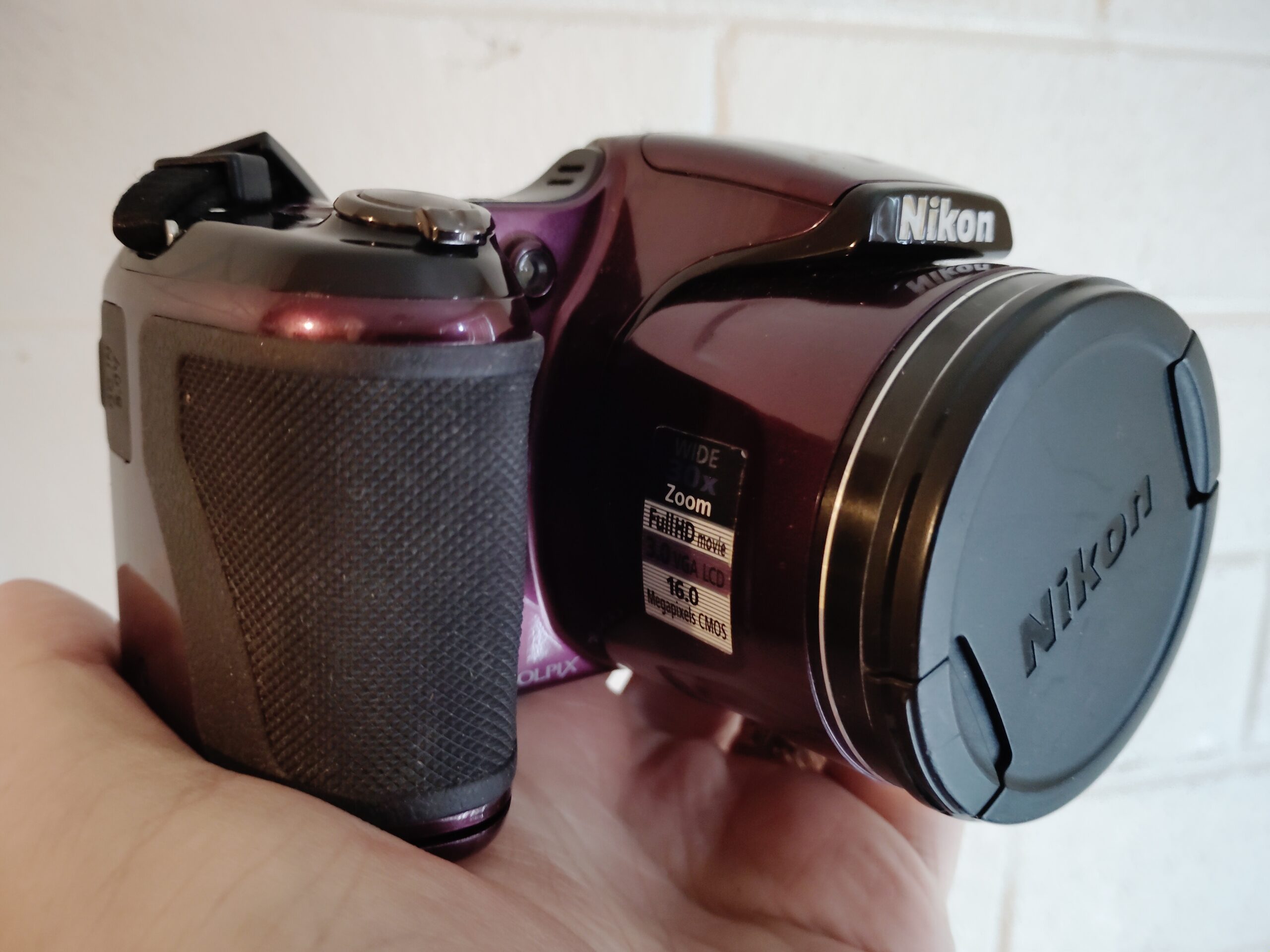
The featured image above is a recent Goodwill find, in fact. It has a 16 megapixel sensor, 30x optical zoom, and while the microphones aren’t the best it’ll record the lower end of HD video. I paid $35, including shipping costs.
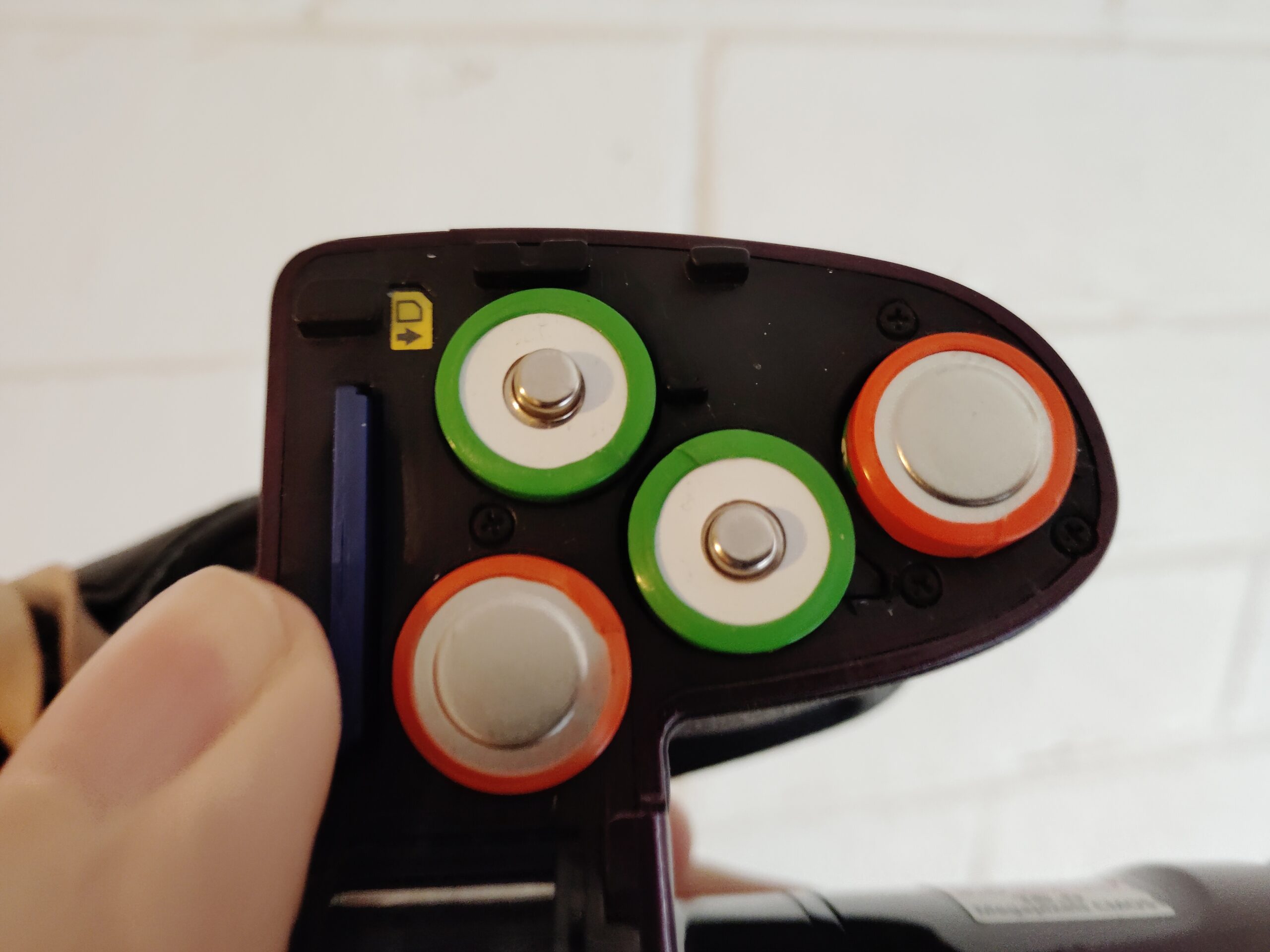
At this point when I’m looking for bridge cameras I specifically search for the Coolpix line. They have a good form factor, appear to be workhorses, and many of the older models can run off of 4 AA batteries. (I buy rechargeable Lithium batteries to keep the long-term costs down.)
I’ve still wasted money, there, but that can be avoided with a few ground rules.
The Rules of Acquisition Shopping Goodwill Online
- Use the filters.
At the time I’m writing this, the filters are over on the left hand side. Even if you only use them to limit your category and set a maximum price you’re willing to pay, this will save you a LOT of time and aggravation.
Sometimes I’ll limit my search by adding Coolpix as a search term. There’s lots of good brands and models out there but I’ve had good luck with those and it limits my time spent browsing through entries. - Always check the shipping estimate.
This isn’t Amazon Prime. I’ve found shipping for cameras tends to be around $15, so when you’re budgeting, assume you’re going to be paying your maximum bid PLUS another $15 on top of that. Even knowing this I’ve still occasionally gotten a bit of sticker shock at checkout.
(Still worlds cheaper than buying new, though.)
Occasionally you’ll find an item that’s local pickup only. It’ll be made clear that’s the case when you look at the shipping info, but in my haste I haven’t always done this. If you’re the winning bid and they’re not shipping it, your options are limited for how to resolve things. - Don’t overbid.
As a personal rule I won’t bid more than $25 on a bridge camera or $50 on a DSLR or computer. You’d think this would keep things affordable, and there’s the problem.
At those caps, I’m going to not win most auctions. This is fine, a lost auction costs me nothing and I can always bid again.
But bidding doesn’t cost me anything, either, and it’s easy to bid on too many things with the hope that I’ll win one of them. That’s what happens if I’m lucky, but I could also end up having to pay for 20 more cameras at $25 each plus $15 for shipping. On a teacher’s salary, that hurts. - Look at the pictures, read the description.
This sounds like it should be obvious, but there’s a non-zero chance that great deal you think you’re getting is for a non-working camera because you missed the “for parts” or “functionality not tested” text.
When I’m buying bridge cameras for my classroom I specifically want the ones that run off AA batteries because of all the rechargeables I have in my lab. This usually isn’t mentioned in the description, but the photos might show the housing for that as well as if it looks like an alkaline battery ever leaked in there. - Step Away
There can be an addictive nature to auctions, with bidding wars and such. When I’m in the market for something, I’ll check once every day or two, around the same time of day, and then close the darned tab. If I have enough active bids to feel uncomfortable I don’t look for more things. This might sound like common sense advice but sometimes one still needs a reminder.
I’ll spend more time looking at the “Open Auctions” section, but that’s where things show up after I have the winning bid.
So there you go, all of my secrets for how I manage to supply my classroom for photography products on the cheap, without spending too much time doing it.