Hit Me With Your Best Shot

An article on PetaPixel by Jeremy Gray has introduced me to grid.photo, a project by Greg Boratyn where users are allowed to post one photo per day.

The limitation is meant to force photographers to only upload their best work, unlike most photo sharing sites where you can post hundreds of images in a day if you want. (Granted, some of them charge for certain volumes of uploads.)

The premise is neat, and though I’ve stopped uploading most of my own photos due to AI scraping nonsense I really hope grid.photo takes off. (You should really read the article, it goes into background not evident from just visiting the site.)

It makes me think about quality vs. quantity in regards to photography. Back in the day [cue old man yelling at cloud voice], if I was fortunate I’d have a roll of 36 possible shots. Not being independently wealthy, I quickly learned I needed to make each one count. I won’t say I managed that, but I spent a lot more time focusing (pun intended) on making each shot as good as possible.

When digital came around, my photos became effectively free. I could take hundreds, maybe thousands (OK, usually only hundreds) of shots in a single outing, deleting all of the superfluous ones.

Or, frequently, sharing 20 shots of the same thing because the photos were near-identical and I couldn’t decide which was “best.”

My father, who bought the first digital camera I ever got to use (a Sony Mavica, if you must know…), occasionally complains about this. He’s certain the way he and I learned photography is better, because of the thought we had to put into each shutter press.

I disagree.

The thought needs to be there, yes, but from the time I pressed the shutter to when I got to see the prints, I often forgot the tiny details I needed to know to make the lesson valuable. Sure, I could have spent my time with the camera taking detailed notes about the aperture, shutter speed, ambient light, and how I was holding the camera, but instead i was spending my time actively taking photos.

My ADHD brain was not going to stand for note taking on a photo excursion when there were pictures that needed taking.

Sure, I sped up the process when I had access to the campus dark room, but that was still enough of a delay for my brain to reset and wipe short term memory.

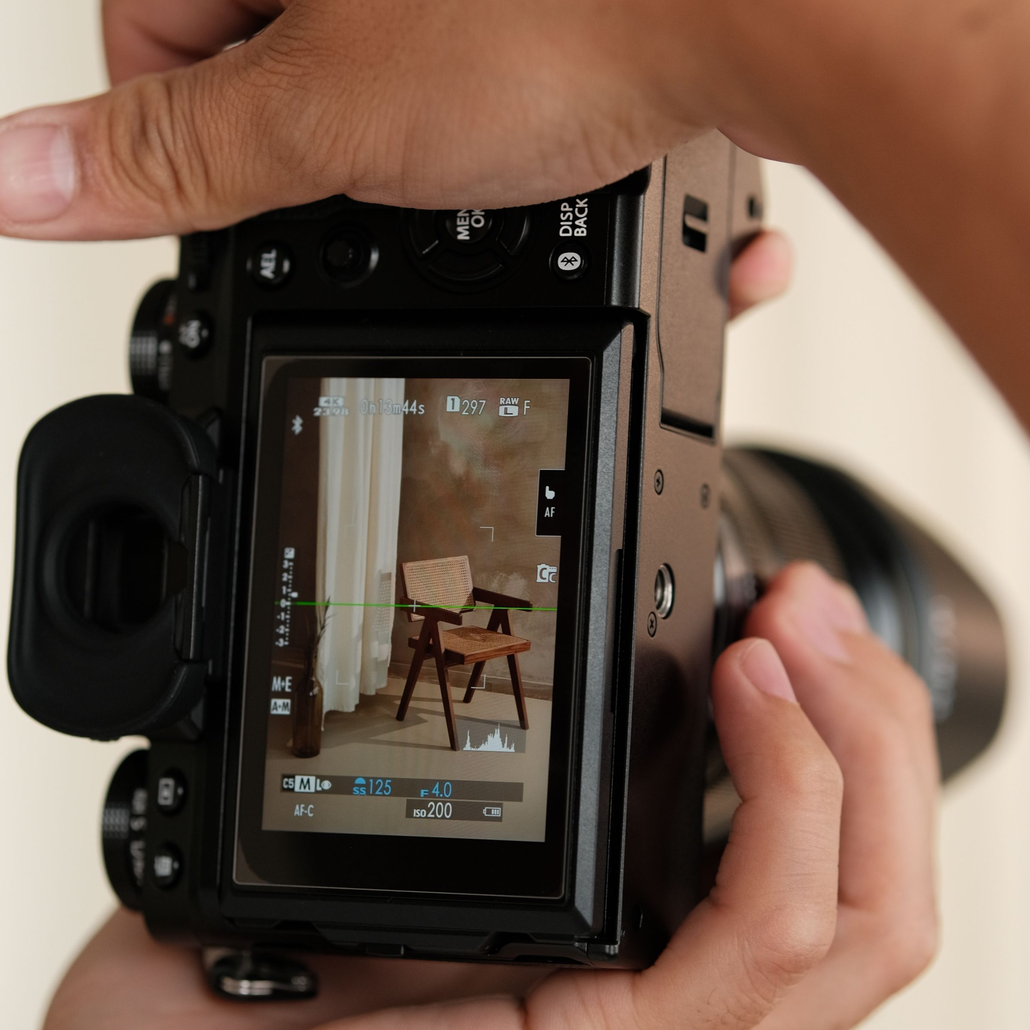
With most digital cameras (I see you, Camp Snap, and love you for what you are), you get instant gratification, yes, but also instant data.

That shutter speed is too slow.

This image is too dark.

My depth of field isn’t deep (or shallow) enough.

Oh, look, a histogram.

Getting this information instantly helps me learn immediately if what I’m doing is a correct choice or off base, so I can make adjustments and (hopefully) score better results.

It means I can have students internalizing key photography elements in one day instead of a week or more.

There’s a couple downsides, of course.

When you enable instant gratification you enable an instant pause on taking more shots. It’s easy for a beginner to overthink settings and stare at that little LCD, wondering what needs tinkering until they’re out of time.

When you enable infinite (or close enough) capacity you enable a surplus of identical shots, making weeding through them a more difficult process.

You’d think these two problems would cancel each other out, and sometimes they do. Most times, the pendulum swings hard in one direction or another.

And then, of course, there’s the student who’s told to hand in their “best 10 shots” so they take exactly 10 shots and call it a day. It’s OK, I get it. They don’t actually want to be a photographer, they just picked the lesson they thought was easy.

I still grade it like they took 100 and picked the best 10, though, so they’d better have a very good eye for composition.


News Review: September 2026

Often, when I’m perusing my RSS feeds looking to learn things and perhaps be inspired to write something here, I find an article where I’ve nothing to add or I’ve already given my two cents a half-dozen times or more.

Rather than just nod thoughtfully and move on to the next story, I thought I’d share a few of them here. I figure I’ll post a collection like this once a month in order to not overdo it.

DIY Photography: Is Photography a Good Career? The Pros, Cons and Reality of Being a Photographer

DIY Photography: Your Photography Could Improve Before You Even Pick Up Your Camera

DIY Photography: Is Spirit Photography Real? The Strange History and Tricks Behind Ghost Photos

DIY Photography: When Technical Knowledge Gets in the Way of a Good Photograph

DP Review: Here’s how a community of photographers keeps their inspiration

PetaPixel: Will Adobe’s AI-Driven, Record-Setting Revenue Ease Wall Street’s Worry?

PetaPixel: Beyond Golden Hour: How to Take Better Landscape Photos All Day

PetaPixel: Photographers Outraged After Heavily AI-Edited Image Wins State Fair Photo Competition

PetaPixel: Stanford AI-Edits Photo to Change Student’s Race and Gender

PictureCorrect: The Easiest Photography Niches to Monetize Without Being “The Best”

PictureCorrect: The Best Photography Habits for Busy People

SLR Lounge: Smoke Photography Tips and Ideas for Incredible Images

Open Culture: The Digital Dada Library: Discover the Archive That Preserves the Original Publications of the Experimental Anti-Art Movement Online

SLR Lounge: My Trick For Getting Kids to Smile Naturally in Photos 99% of the Time

EdSurge: AI Videos Are Warping Early Learning, Teachers Say

EdSurge: New York and Los Angeles Ban Student-Facing AI (For Now). Should Other Schools Follow?

EdSurge: The “October Blues” Are Coming. Here’s How Teachers Can Beat Them.

EdSurge: The Cost of Unchecked Assumptions: Fewer Male Teachers, More Baby Slop

Education Next: Schools of Distraction

Education Next: The Penalty Students Pay for Using AI

The Hechinger Report: OPINION: Our children need more protection from the AI that is teaching them

The Hechinger Report: OPINION: We’ve been treating college as a career plan, but it’s failing too many students

The Hechinger Report: More than half of colleges show signs of money problems. Students will suffer the consequences

The Hechinger Report: The emerging fight against grade inflation in K-12 classrooms

404 Media: There’s a 100% Chance AI Agents Are Already Ruining the Internet

404 Media: ‘Doom Loop’: OpenAI and Microsoft Admits LLMs Are Destroying the Web and Built on Theft

404 Media: How AI Chatbots Are ‘Deskilling’ Human Empathy

Digital Device(ive) Policy

Dan Clark wrote an article for EdSurge in favor of cell phone use in the classroom.

I’ve been back and forth on this issue, myself. For a very long time, I saw the built-in cameras as “good enough” for video and photo content. There were even a handful of decent, free (or “freemium”) video editors for phones and tablets, allowing my students to complete entire video projects without ever needing a desktop or laptop! It was great!

Any time there was talk about a cell ban, I was the one who championed their usefulness to my admin.

I no longer do this.

There’s a few reasons why, and since this is my blog, I get to list them here.

3. Phones have become less useful.

These little computers have gotten much more powerful, to the point where phone processors can power decently specced laptops. That’s great!

… but too many apps want to track everything you do. I can’t in good conscience recommend a student submit to constant tracking to create things.

Not to mention how AI proponents (in their continuing quest to ruin everything) won’t even leave your photos alone when you take them.

2. Older cameras are still great!

I’ve nerded out about bridge cameras already on here so I’ll spare you the brunt of it, but for a fraction of even what a budget phone goes for I can get a used camera that records HD video and has an actual optical zoom lens.

Sure, “the best camera is the one you have,” so if the only one you have is your phone, then fine. My students don’t get to make that claim, because we have a bunch of lab cameras.

They still have to wait their turn, but not because of a lack of devices. It’s because I’m not sending them to scatter around the school to do their recordings.

1. The misuse continued.

I won’t go into the details here, but my argument for constructive, artistic, on-task phone use in my classroom was countered by the students who ended up in an office having to explain to a parent and admin why what they did seemed like a good idea at the time.

Could students make good use with their devices? Absolutely! Many did! Some won awards for their hard work at film festivals!

But too many of them have ruined that for the rest, and we have alternatives in my lab right now that are just as good if not better.

It’s a shame, on a lot of fronts, but in the end it wasn’t my decision.

Honestly, I don’t want that job.

“Creative” Companies Should Pay Creative People

There are few things that make me more upset these days than a company encouraging artists to betray other artists in favor of AI slop. Adobe famously did that, as reported by PetaPixel. (They later tried to clarify what they meant, but in my opinion it did a better push to get photographers off of Adobe products than any ad campaign run by a competitor. Photographers weren’t their target audience, though.)

Well, I’ve found something that’s close. Apparently Ricoh and DJI are fans of using slop in their ads, which is strange as you’d think camera companies should have a photographer or two on the payroll, right?

I’m going to assume that neither company has enough faith in the quality of their hardware to consistently show us images made with their cameras, even cherry-picked ones.

I’d love to end this post on a happier note than this. I want to shout from the rooftops that open source exists, and it does, but open source hardware isn’t so much a thing.

Of course there’s used hardware. Aim for that and not a single penny goes to the manufacturer. That’s getting harder to do, as prices for used equipment continue to increase.

So how about this.

How about we just make art. Let’s celebrate what we can do. It doesn’t need to be perfect. It doesn’t even need to be good. It just needs to be ours.

We don’t need to think about Ricoh, DJI, or even Adobe when we do this. We can use whatever tools we have, perhaps borrowing or loaning things where needs and surpluses exist.

I don’t think that’ll solve the problems here. I don’t know how to do that.

But I know sometimes it’s worthwhile to find one’s joy anyway. I find a lot of mine in art, so I’m going to go make some.

Find your joy.

Of Course it’s Art, but Whose is it?

DIY Photography has a decent article on why Photography is art. It should be of no surprise that I agree.

I’ve fallen a bit behind on my RSS feeds, so I only encountered the article AFTER seeing Ewen Bell’s video on how every photo is a lie. (And even then, I watched the video after hearing the same episode in his podcast.)

My own take on why photography is art is similar to what’s linked above, but it boils down to this: I’m making creative choices, so it’s art.

I’m choosing what to crop, what angle to use, and if I have a fancier model in my hands I’m adjusting focal lengths, shutter speeds, apertures, and even occasionally the ISO from one shot to the next.

But even if all I’m doing is deciding what should be within the frame and when I should press the button, it’s art.

Now things get fuzzier when someone else’s choices start getting involved.

During the school year, the vast majority of my photos are of school events – in particular, our student performances.

I’ve taken thousands of photos of our band, orchestra, chorus, piano, and theater students doing amazing things on stage.

There’s a lot of shots where I’m incredibly proud to be the one who captured THAT image.

I don’t keep them. Not a single one is on a personal hard drive of mine. They aren’t even printed out and hung on a wall, or kept in an album.

I don’t really think of them as mine.

Our performances are planned by amazing people, including but not limited to the students. Someone decides where everyone will be, how they should move, and which lights will be pointing in which direction.

That’s a lot of creative choices. That’s art.

I’m happy to do the work I do during those shows, but I’m not there to make art. I’m there to document THEIR art. My hard work exists to show off what they’re doing. After each show, I hand the photos over to the teacher(s) in charge of the performance and let them decide what to do next. At that point, I’ve removed myself from the process.

I could probably argue that my photos are a collaborative effort, and many do. I make that assertion for my students who are doing the same thing during performances, as I want them credited for their efforts.

I don’t know why I prefer to not be treated the same, but that’s the case. The art is theirs.

I count myself fortunate to have the privilege of documenting it.

“Best” is Subjective #Blaugust2026

(This is my thirtieth post in a series of entries I’m using to participate in Blaugust for 2026.)

Ewen Bell has released a video where he encourages his viewers to buy the camera they love.

He’s very adamant about it, to the point where he says it repeatedly throughout the video, but also he mentions that if you already love the camera you’re using, you don’t have to buy another.

I’m not sure I’ve ever heard a career photographer say that before, but here we are.

I started following Ewen Bell because where we have a similar knowledge base we tend to agree, but he has far more experience in several areas so I’m bound to learn something from watching.

For example: I learned there’s little chance I’ll be buying his favorite camera. A used model costs over $2,000 US, which is not something he brought up in the video. For a professional photographer, that’s still quite reasonable. For me, not so much.

As a digital media teacher I’m frequently asked what things should be purchased. Parents and students want to know what the “best” thing is, as if all electronic devices were organized in a line from best to worst. Instead, I hem and haw about types of cameras and what works well for which situation.

Buying what you love is a far easier metric than any objective standards that I’d be able to manage.

My students still understand this, to some degree. I’ve a bunch of cameras in my room, but the ones they gravitate towards aren’t the newest or most expensive. They’re the ones they enjoy the most. Some of that’s aesthetics, some of it’s ease of use, but all of their criteria are valid.

Unless they want to borrow one of the DSLRs that’s too old to do video in order to record video. Then they’re going to run into a problem or two.

Vertical or Horizontal? #Blaugust2026

(This is my twenty-eighth post in a series of entries I’m using to participate in Blaugust for 2026.)

I recently watched a YouTube video by Mark Urban where he complains about aspect ratios.

Reading that previous sentence usually has me thinking it’s going to be a rant about which format is preferred over the other. (I’m a horizontal video person myself, but that’s mainly because that’s what I watch.) This video doesn’t do that. Instead, it addresses concerns that I, as someone who doesn’t freelance, usually never has to consider.

As is my trend, I won’t be summarizing the video here. It’s worth watching, even if the best possible solution (paying for two photographers so you get both shots) is sadly impractical.

Or is it?

I teach students to make video. For the past two years, we’ve partnered with an organization outside the school to do client work for them. If I have more than one student collecting b-roll and a-roll, it’s trivial to have one record horizontally while the other records vertically.

This could lead to some interesting discussions about what to do with the shots, who the target audiences are, and how the aspect ratio affects the compositions.

And also there’s going to be that student that takes the vertical video and edits it so it’s in a horizontal aspect ratio but not cropped, so there’s large black boxes on either side. That’s a whole other discussion.

I Should Have Expected PBS.org to be This Good #Blaugust2026

(This is my twenty-seventh post in a series of entries I’m using to participate in Blaugust for 2026.)

As I type this, I’m watching a well-made documentary about the Space Shuttle Columbia disaster. It’s not on Netflix, Hulu, or even YouTube. Well, maybe it is, but that’s not where I’m watching it.

PBS has been building a rather impressive website, complete with streaming video. It has closed captions, different resolution options, and even playback speed controls.

It also has an option to go to the PBS site for my local station. When I first visited, it defaulted to WETA PBS, which is based out of Virginia. The first choice screen gave me WETA, Maryland Public Television, and Howard University Television (which is based out of D.C.).

Wanting to see what else was there I picked the “More Stations” button, and was prompted to enter a state or zip code. On a whim, I thought I’d check the PBS station I remember watching when I was younger.

Making the selection still gives you access to tons of shows, including documentaries and dramas, but also lets you select from their local shows (Scholastic Scrimmage, local interests, and more).

There’s more than one spot where I’m prompted to donate or sign in to watch additional content, and considering their current changes in funding I don’t fault PBS for this, but the thing is I didn’t know any of this was here.

I mean, I knew PBS was online, but I thought they mostly put selected shows on YouTube or the various paid streaming services.

I’m glad this is here. I need to come back to it more often.

Archived: Art

Human Made Art is a Selling Point #Blaugust2026

(This is my twenty-sixth post in a series of entries I’m using to participate in Blaugust for 2026.)

404 Media has an article by Emanuel Maiberg on 3d models (assets for graphic design, video game creation, etc.) and how a lot of the current ones being made for sale are AI generated, but no one is buying them.

This pairs with an earlier article by Justin Nelon over on Digital Citizen covering how video games on Steam that are marked as made with some AI content tend to get far less play time.

Said nicely, consumers are preferring things made by humans. A bit more rudely, no one wants to pay for AI slop.

This is a lesson I intend to keep in mind as I talk to my students about the tools they can use. They might think AI is great for cutting corners and getting more done, but the end result tends to be media that is less desired than anything else they could have done.

Where I encounter the most AI use is in research and script writing. Students hate those portions the most (at least in my class), so they try to pawn that off on a machine. The results get troublesome when they get dinged for not including sources (or including ones that don’t cover the content researched). I might not be the best at recognizing AI writing, but I can follow a source link just fine.

I’m looking forward to the bubble burst, when anyone wanting to use AI is more likely going to have to pay for the slop they’re getting. According to current data, they won’t be paying for it.

Archived: Art

The Medium Alters the Message #Blaugust2026

(This is my twenty-third post in a series of entries I’m using to participate in Blaugust for 2026.)

Raf Lopes wrote on PetaPixel about his experiences with a camera designed to shoot square photos, and how it affects composition choices.

I’m old enough to recall a time when TVs were 4:3 and movies made for big screens were cropped down to that aspect ratio to get them to “fit.”

This was done in two ways: If the person doing the conversion was overworked or lazy, they set a camera up to film the movie and let it run centered for the duration. Any action on the edges was lost, but oh, well.

If the person doing the conversion had the energy and time to do better they would pan their camera to follow the action as it went closer to the left or right of the composition. This required some editorial and aesthetic decisions on their part that might not made with consultation with the original makers of the film.

Later on we got “Letter-boxed” versions that were seen as better because nothing was cropped out, but in the days before HD video being a universal thing this still meant a lot of detail just wasn’t there any more.

I remember cassette tapes, which often had the same album art as records but cropped to be rectangles. Then CDs became more popular and we went back to squares for everything. We still have that legacy, it’s why album art for music today is always a square, even if it’s (almost) all downloads or streaming.

I remember programmers working hard to get their creations to be less than 1.44 MB (technically a little less than that) because if you went over and needed two floppy disks you doubled your distribution costs. The innovations they made because they had to were amazing.

This isn’t a “good old days” or “things are so much better” blog post, but it’s interesting to see how creativity flows to fill the shape of different containers. Sometimes it’s begrudgingly (cassette tapes), other times, like in the article linked above, it’s transformative.

My classroom is a container, regardless of if I want it to be or not. Try as I might, I still have students submit videos where the actual text on the title card is “Project 2” instead of “The Great Escape,” “Bob Finds A Thing,” or anything else that makes it be less “I did this for a grade” and more “I have created documentation of my own creativity.”

In the other extreme, sometimes I have to talk with a student about what “G Rated” means, and why we need to make videos conform to that for the district Film Festival.

(It’s not just because of the student code of conduct, it’s also because elementary students participate so they WILL see the videos. Blood and death are neat and cool to a 13 year old, but perhaps not a good idea to show a 6 year old.)

What I write here is shaped by the container I’m in as a teacher. The content I cover, the words I use, are all done with the understanding that a student, parent, or administrator who knows me will find this website.

It’s happened. Multiple times, in fact. I don’t tell anyone at school where this is and my name’s common enough that Googling me will find other, more famous people first (adding qualifying terms leads to sites maintained by my employer more than anything else) so it would be easy to slide into a false sense of security through obscurity, but then I remember I’ve been found before.

(You’ll notice I never use profanity. I’ll even warn the reader if a link goes someplace that does. This is why.)

Sometimes, when the container/media changes, the art changes with it.

I’ve only a few years remaining before I’m ready for retirement. I’ve thought a little about what that will look like, but I can’t predict how.

I’ll flow into that new container when I get to it, I guess.

Archived: Art