Old Isn’t Cheap

Kids these days don’t always recognize quality, but they’re starting to find it, anyway.

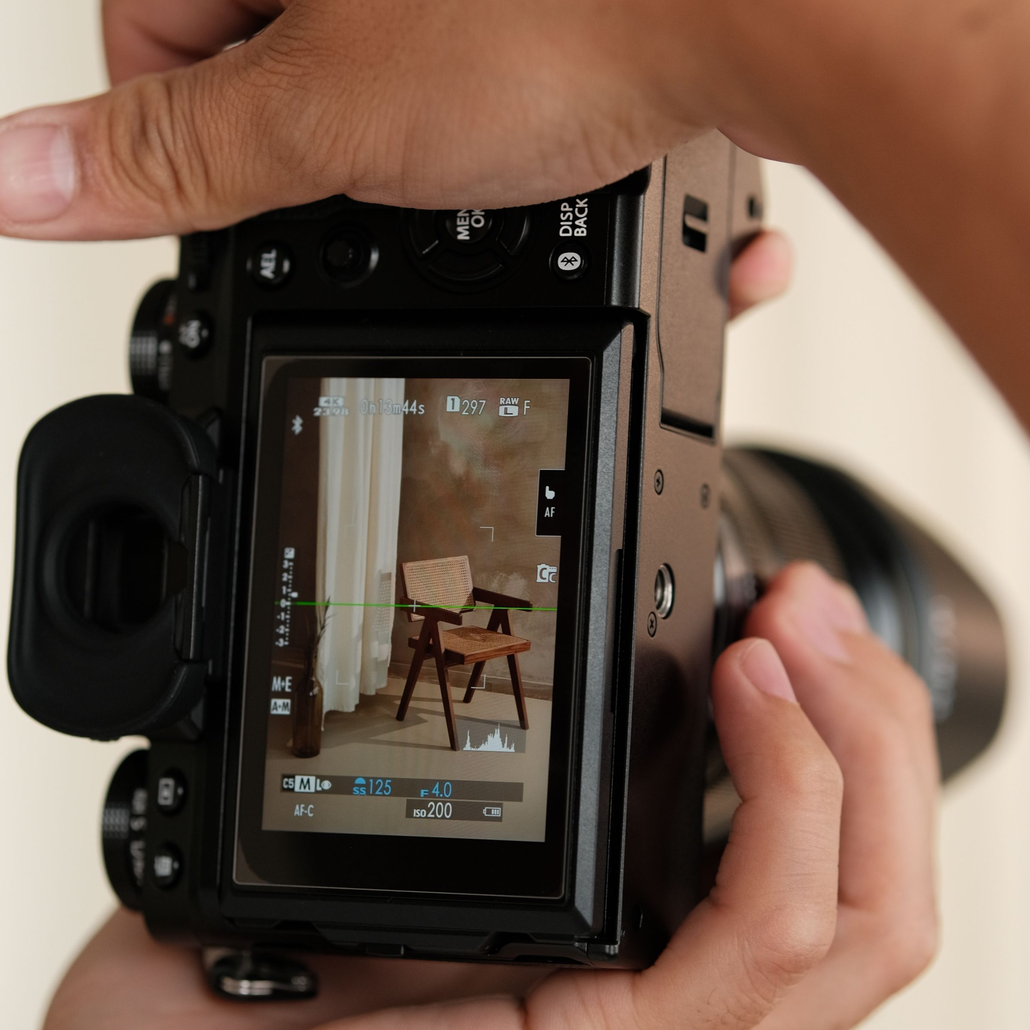
PetaPixel ran a story last month about used camera prices going up. This wasn’t necessarily news to me, as someone who has, more than once, blogged on here about picking up thrift store cameras for classroom use.

At first I noticed it with the Canon Vixia models. Vixia as a line still exists, but they’re larger, more professional models only these days. The tinier ones, line the Canon VIXIA HF R400? I got so much work out of them with my students. For the price they had amazing lenses as well as 1/8″ jacks for audio in and out.

I did occasionally manage to snag one or two used models, but these days the working ones go for the same as what they cost brand new, if not more.

Same is true with compact cameras. Yeah, there’s a resurgence of new models out there, but the really popular ones are models that were discontinued years ago. Back in 2020 I was able to pick up a bunch of them for a song. Now? I don’t even place a bid – especially if they’re a color that isn’t silver or black.

I’m aware that most of the renewed demand is for the vintage aesthetic of old cameras. They aren’t just functional, using one itself is a fashion statement. (I’m not disagreeing, there’s a reason my favorite still camera right now is a Camp Snap Pro.)

But also, none of these older cameras have AI “features” while still having decent enough sensors and lenses to do what’s needed.

Heck, a lot of the older models will run off of AA batteries, taking one less proprietary part off of the “hope it exists in a few years” list.

The most popular camera in my room is not the best camera if you’re looking for megapixels, sensor size, or features. It’s the one that’s pink, that I got for @ $15 including shipping.

But I’d also argue it does a better job taking a photo than most phones my students bring to school. It’s dedicated towards that end, with none of the distractions baked into an always online device.

If I could still get that model for $15, I’d buy a class set.

(This Blog’s) Life After #Blaugust2026

(This is my thirty-first and final post in a series of entries I’m using to participate in Blaugust for 2026, but that doesn’t mean I’m done.)

The Why

I did Blaugust this year on a whim.

No, that’s not entirely true. I did it to procrastinate other tasks on my to-do list, and to get myself back into blogging after a very significant break. My brain needed some kind of goal to focus on in order to get past that “I can always start tomorrow” wall.

But also on a whim.

But also because a friend of mine who liked participating in Blaugust wasn’t able to this year because of health reasons.

And also another person who I’d have liked to call a friend (a few conversations on Mastodon is not enough to reach that point) isn’t around any more to lead us through Blaugust.

The Past

I started this blog on January 25th, 2005 as a project for a grad school course. The final project for the class had to be a website, but I’d already been doing HTML coding for 9 years at that point and, while I was no expert, I was further along than what was expected by the curriculum.

So I made a blog instead of hand-coding a static website with an image and a handful of links. If I remember correctly, it was originally hosted on a .Mac or Geocities account (I can’t remember which, both are long gone, now) and built using Thingamablog, which ran on a Mac but output the entire blog as static pages you could then upload somewhere without needing PHP or mySQL support.

At that point getting everything to look the way I want was way more of a challenge than what was expected, but I wanted to get something out of the class. Oddly enough, Mark Harden (whose “Artchive” was featured in that inaugural post) was eventually one of my grad school professors.

Unless I’m remembering this wrong. It was 20+ years ago, after all.

Less than 4 months later, I was podcasting.

By December 2005 I was part of the Discovery Educator Network, which was always meant to be a way to encourage teachers to advertise Discovery Education’s streaming service for free, but back then they were in the “spend lots of money and just encourage people to make cool things” stage so a young(er) and naive me didn’t catch on.

Throughout that journey I never stopped blogging and podcasting, up until 2008 when I got a job offer for my current building. I’d no longer be a traveling art teacher, or even an art teacher (by strict job description definition), but instead I’d be teaching technology to K-8 students.

I leapt on the opportunity immediately.

Since then my job description has changed. I’m back in the Creative Arts department because that’s what video production, photography, graphic design, and podcasting all are. I’m having a ton of fun, and I’ve also been very, very busy.

So busy that I stopped podcasting and blogging.

Oh, I’d pop in from time to time with an update. Maybe I’d post the slides and/or recording of my conference presentation from that year. It wasn’t the same, though. What had been a place for me to excitedly share things or angrily rant about them had become a place where I stored stuff.

A lot happened. I figured out what the Discovery Educator Network was and jumped out of the boiling pot. I started (and ended) other podcast projects. I restarted my podcast here, then ended it again mid-recording when I realized it wasn’t a fun thing so much as a chore I was forcing myself to complete.

My wife died.

I started another podcast with a group of friends, unrelated to anything I put here. It’s been going strong for over 9 years, now, updating twice a week.

But it’s not about what I do for a living.

My current school district is very big on goal setting. I set goals for my students based on collected data, then check to see if they met those goals. I set a goal for myself, then do the same. My yearly evaluation partly depends on these.

Last year, my goal was “Move Slow and Fix Things.” I didn’t start any brand new initiatives, I just went through and revised any of the older things that needed updating or, well, fixing. Not to brag, but in the process all of my students met the goals I set for them and I earned the highest evaluation rating possible.

The Future (…we got here eventually.)

Last year I was looking internally, at what we had in the building and what needed revisions.

This year, I’m looking outward.

You may have noticed (or not, I don’t check site analytics) that most things I wrote for this year’s Blaugust were reactions to other things I saw online. Usually news articles. Occasionally a video, for flavor.

This was a self-imposed limitation, along with the daily posting. Neither was required for Blaugust, which in fact has very few rules about how to do it beyond not copy/pasting an AI output and calling it a day.

My purpose for this blog’s revival is to force me to look for things that relate in some way to what I do for a living and archive my reactions to them.

I don’t intend to polish what I write here. I expect typos to get through. I expect meandering train-of-thought old-man-telling-stories-again essays that would make any Language Arts teacher reflexively grab for a red pen.

But I also expect to be more informed about what’s changing in the world around me, so I can bring the good parts into my classroom and preparing my students to endure the bad parts.

For Blaugust, I managed 31 posts in 31 days. There’s no way I’m keeping that up now that the school year’s starting.

But I think I can manage at least one a week. More, if there’s some clouds that need me to yell at them, but let’s set once a week as a minimum.

It’s good to be back.

“Best” is Subjective #Blaugust2026

(This is my thirtieth post in a series of entries I’m using to participate in Blaugust for 2026.)

Ewen Bell has released a video where he encourages his viewers to buy the camera they love.

He’s very adamant about it, to the point where he says it repeatedly throughout the video, but also he mentions that if you already love the camera you’re using, you don’t have to buy another.

I’m not sure I’ve ever heard a career photographer say that before, but here we are.

I started following Ewen Bell because where we have a similar knowledge base we tend to agree, but he has far more experience in several areas so I’m bound to learn something from watching.

For example: I learned there’s little chance I’ll be buying his favorite camera. A used model costs over $2,000 US, which is not something he brought up in the video. For a professional photographer, that’s still quite reasonable. For me, not so much.

As a digital media teacher I’m frequently asked what things should be purchased. Parents and students want to know what the “best” thing is, as if all electronic devices were organized in a line from best to worst. Instead, I hem and haw about types of cameras and what works well for which situation.

Buying what you love is a far easier metric than any objective standards that I’d be able to manage.

My students still understand this, to some degree. I’ve a bunch of cameras in my room, but the ones they gravitate towards aren’t the newest or most expensive. They’re the ones they enjoy the most. Some of that’s aesthetics, some of it’s ease of use, but all of their criteria are valid.

Unless they want to borrow one of the DSLRs that’s too old to do video in order to record video. Then they’re going to run into a problem or two.

Good, Cheap Computers Still Exist, Sort Of #Blaugust2026

(This is my twenty-ninth post in a series of entries I’m using to participate in Blaugust for 2026.)

(TL;DR: College Surplus stores are neat!)

The Switch and Click YouTube channel recently published a video where they end with a decent desktop computer that doesn’t break the bank.

I like a lot (though not all) of what I see from that specific channel. They have some neat ideas and while they don’t explain every step they at least go over enough to let me know if I should research further to do a thing myself.

This time around, I’d not suggest the average person try what they did, because they aren’t average people.

Part of the premise of this particular video has them going to Facebook Marketplace to get parts to build a computer and/or a fully built computer that they can upgrade. This involved getting into the guts of the machine, diagnosing problems and bottlenecks, and making sure that the new parts are actual improvements.

For them, it seems trivial.

For me, who has built a few computers in my day, it would be a challenge.

For the average person who needs to go this route because they cannot afford a computer any other way, this is a lot of additional work with no guaranteed payoff, meaning that money could just go down the drain.

Don’t get me wrong, I’m thrilled when someone with an interest gets into computer building and maintenance. I think it’s a neat hobby that can with a little more work become a source of income.

I am the only person in my family who thinks this is neat, and one of them has an engineering degree. Do I think they could manage it? Yes! There’s enough instructions out there and my family members tend to have decent critical thinking skills.

… But that’s not how they want to spend their time, and for several of them they don’t have the time to spend doing this.

I’ve had the luxury of having enough income and leisure time to do what I’ve done. If someone doesn’t have both of those I will not fault them for going a different route.

So what options are left?

Sadly, not a ton of good ones. As much a fan as I am of thrift stores, it’s my experiences (some hard-earned) that keep me from getting a lemon. That took time. As much as I despise Meta, I’ve heard good things about deals found there, but that takes more time and can include more risks.

That leaves most thinking their only choices are the big online stores like Amazon, Woot (which is Amazon’s store for refurbished, open box, and clearance items), and NewEgg. I confess that back in the day before I kicked the habit of sending money for Bezos’ yacht, I got more than one decent machine from Woot – most of which are still working just fine today, including a couple that are over a decade old. If you’re low on cash and time, I wouldn’t blame you for using Woot even if I have enough privilege to avoid it.

But there’s another neat one: Surplus Stores.

There’s a few like this, I’m sure, but I found out these exist when a friend told me about her local university’s outlet for selling surplus and used items.

Can I get better deals from Goodwill’s online auctions? Absolutely, but that takes time and luck.

Compare that to MSU’s store, where I can just go to the Desktop category and buy a desktop.

It’s not perfect. You still need to read the descriptions to make sure you know what you’re getting. (That $20 computer with 16GB of RAM sounds great, but it’s that cheap because you need to install a hard drive and also the processor’s old enough and low power enough that the RAM won’t be the bottleneck for how fast it’s running.) But there’s no bidding wars and a lot of these should work out of the box for way less than what Switch & Click paid for their example computer in their video.

If it wasn’t for how much I’ve spent on back-to-school items already, I’d be inclined to get one or two of these myself.

You know…

Just in case I need them.

Vertical or Horizontal? #Blaugust2026

(This is my twenty-eighth post in a series of entries I’m using to participate in Blaugust for 2026.)

I recently watched a YouTube video by Mark Urban where he complains about aspect ratios.

Reading that previous sentence usually has me thinking it’s going to be a rant about which format is preferred over the other. (I’m a horizontal video person myself, but that’s mainly because that’s what I watch.) This video doesn’t do that. Instead, it addresses concerns that I, as someone who doesn’t freelance, usually never has to consider.

As is my trend, I won’t be summarizing the video here. It’s worth watching, even if the best possible solution (paying for two photographers so you get both shots) is sadly impractical.

Or is it?

I teach students to make video. For the past two years, we’ve partnered with an organization outside the school to do client work for them. If I have more than one student collecting b-roll and a-roll, it’s trivial to have one record horizontally while the other records vertically.

This could lead to some interesting discussions about what to do with the shots, who the target audiences are, and how the aspect ratio affects the compositions.

And also there’s going to be that student that takes the vertical video and edits it so it’s in a horizontal aspect ratio but not cropped, so there’s large black boxes on either side. That’s a whole other discussion.

I Should Have Expected PBS.org to be This Good #Blaugust2026

(This is my twenty-seventh post in a series of entries I’m using to participate in Blaugust for 2026.)

As I type this, I’m watching a well-made documentary about the Space Shuttle Columbia disaster. It’s not on Netflix, Hulu, or even YouTube. Well, maybe it is, but that’s not where I’m watching it.

PBS has been building a rather impressive website, complete with streaming video. It has closed captions, different resolution options, and even playback speed controls.

It also has an option to go to the PBS site for my local station. When I first visited, it defaulted to WETA PBS, which is based out of Virginia. The first choice screen gave me WETA, Maryland Public Television, and Howard University Television (which is based out of D.C.).

Wanting to see what else was there I picked the “More Stations” button, and was prompted to enter a state or zip code. On a whim, I thought I’d check the PBS station I remember watching when I was younger.

Making the selection still gives you access to tons of shows, including documentaries and dramas, but also lets you select from their local shows (Scholastic Scrimmage, local interests, and more).

There’s more than one spot where I’m prompted to donate or sign in to watch additional content, and considering their current changes in funding I don’t fault PBS for this, but the thing is I didn’t know any of this was here.

I mean, I knew PBS was online, but I thought they mostly put selected shows on YouTube or the various paid streaming services.

I’m glad this is here. I need to come back to it more often.

Human Made Art is a Selling Point #Blaugust2026

(This is my twenty-sixth post in a series of entries I’m using to participate in Blaugust for 2026.)

404 Media has an article by Emanuel Maiberg on 3d models (assets for graphic design, video game creation, etc.) and how a lot of the current ones being made for sale are AI generated, but no one is buying them.

This pairs with an earlier article by Justin Nelon over on Digital Citizen covering how video games on Steam that are marked as made with some AI content tend to get far less play time.

Said nicely, consumers are preferring things made by humans. A bit more rudely, no one wants to pay for AI slop.

This is a lesson I intend to keep in mind as I talk to my students about the tools they can use. They might think AI is great for cutting corners and getting more done, but the end result tends to be media that is less desired than anything else they could have done.

Where I encounter the most AI use is in research and script writing. Students hate those portions the most (at least in my class), so they try to pawn that off on a machine. The results get troublesome when they get dinged for not including sources (or including ones that don’t cover the content researched). I might not be the best at recognizing AI writing, but I can follow a source link just fine.

I’m looking forward to the bubble burst, when anyone wanting to use AI is more likely going to have to pay for the slop they’re getting. According to current data, they won’t be paying for it.

Free Play With A Plan #Blaugust2026

(This is my twenty-fifth post in a series of entries I’m using to participate in Blaugust for 2026.)

The Hechinger Report has some great writers who hit important points as they cover news stories about education. They also have frequent “Opinion” pieces which tend to be guest essays, frequently written by someone with a vested interest in having you buy into the idea(s) they’re selling.

They might be good ideas! However, it’s always a good idea to understand bias exists and look at the work through that lens. (I don’t exempt myself from this. Everything I put on this site has bias, because it’s MY website. We tend to see news sites in a different light, though.)

Take, for example, a recent opinion piece by Lenore Skenazy on letting children play rather than providing guided instruction.

The author has a book on the subject as well as a nonprofit to promote these ideas. The bias is clearly there. This is not a news story so much as an ad read for their ideas.

They aren’t bad ideas.

One of the things I enjoy doing in my K-5 classes is giving students a day to just experience a new tool. Most times I’ll go over some basics “Your brush options are over here on the left, the color picker works like this,” but after that I let them loose.

I never go over everything. First, there’s too much. The only ones who’d get to play with the tool would be the ones who stopped paying attention.

Just as important, though, would be how the students learn after that. Invariably, someone does something they think is cool. They yell to the rest of the class in a way that, for other lessons, would be seen as disruptive.

Suddenly, there’s a crowd of kids around one computer learning how to do a thing from one of their peers. They all go back to their seats, eager to try it out for themselves.

This usually happens several times in the same lesson. On occasion, I learn something new as well.

Later on I’ll come in with a more narrowed scope, where we use that same tool to make a certain kind of artwork. They learn new skills and techniques, then, often ones that translate to a variety of media in an outside of my classroom.

But they remember the joy they got from trying things out. That sticks with them as they incorporate those first day lessons into the new one.

That sticks with them.

A Library’s Hidden Cost (& How They Help You Avoid It) #Blaugust2026

(This is my twenty-fourth post in a series of entries I’m using to participate in Blaugust for 2026.)

Edsurge has an article by David Weldon on Middle School reading scores and their continued decline. As much as I’m tempted to turn this post into another rant against high stakes testing and its effectiveness, I’m just going to ask you to review your notes for that chapter and move on.

My own love of reading stems in part from my mother. She was a kindergarten teacher and frequently read to us before bed. (Sometimes she sat in the hallway so all of her children could hear the same story at the same time.) On long car trips, SHE was the audio book.

I read my first book without assistance because I’d gotten so tired of my sister asking for the same story over and over again that I just grabbed something else and read it to myself out of spite. Not the best motive, perhaps, but I was a child and that was the memory.

This of course required a lot of books. We had a bunch, sometimes found at yard sales and flea markets, but as someone who’s recently taken up thrifting as a hobby I can tell you that still takes money, and what you save in finances you lose in time and energy.

Fortunately, we had a solution: Our town’s public library.

My mother left the classroom when she had me, so she had the time to bundle us kids up and drive us to the most exciting building in town once a week. We each got books that seemed interesting to us, with the curation mostly limited to “get it from the children’s section” up until I was old enough to walk there after school on my own.

This seems idyllic in part because I’m viewing it through the lens of nostalgia, but also in large part to my mom’s hard work.

… and there’s the cost.

Libraries are free to the public, but if my mom had still been teaching I’m not sure we’d have been able to go once a week, or even once a month, during the school year. My father worked much harder to make ends meet so that we could have the privilege of growing up with a stay-at-home mom.

Finances aside, wrangling children is an adventure of its own. My sister (not the one mentioned earlier) is the most put-together makes-the-right-parental-choices person I’ve ever met, and I’m not saying that lightly. It still takes her a significant amount of time to load her two small children into a vehicle to go on a short trip.

She’s also a stay-at-home mom.

So how do two income families manage library trips?

How do single parent families manage library trips?

There’s an ongoing theme of people below a certain economic threshold having a very hard time to get above it. Everything requires money, it seems, and if you want to save money you either need to already have enough money or have enough time.

Those who are struggling frequently have neither.

Libraries are painfully aware of this, and are here to help.

The last place I lived, I signed up for a library card without ever walking through the door of their local branch. I went to the website and entered some information, then *poof,* I had an identification number that was effectively my card.

(It was faster to go into the library near my current place and get a card, but I’m privileged to live very close to that library.)

At the time, I used it to sign up for Libby. It’s a great service provided by many libraries that offers free books in both text and audio formats. These are still considered loans from your local library so if 4 people want to check out a book and they have authorization for 3 copies, one of them will have to wait, but you’re not paying a monthly Audible subscription or Amazon membership for the privilege of downloading books to your phone or tablet.

I’m not going to say Libby’s a perfect solution because there isn’t any. It still requires you to have an online device and, as ubiquitous as phones tend to be these days, they aren’t always available.

But my love of reading comes from my mother reading to me, with weekly trips to the library.

If Libby or something like it had been around back then (and the internet … this was before then, too), those weekly trips could have been daily.

She wouldn’t have even had to load up the car.

The Medium Alters the Message #Blaugust2026

(This is my twenty-third post in a series of entries I’m using to participate in Blaugust for 2026.)

Raf Lopes wrote on PetaPixel about his experiences with a camera designed to shoot square photos, and how it affects composition choices.

I’m old enough to recall a time when TVs were 4:3 and movies made for big screens were cropped down to that aspect ratio to get them to “fit.”

This was done in two ways: If the person doing the conversion was overworked or lazy, they set a camera up to film the movie and let it run centered for the duration. Any action on the edges was lost, but oh, well.

If the person doing the conversion had the energy and time to do better they would pan their camera to follow the action as it went closer to the left or right of the composition. This required some editorial and aesthetic decisions on their part that might not made with consultation with the original makers of the film.

Later on we got “Letter-boxed” versions that were seen as better because nothing was cropped out, but in the days before HD video being a universal thing this still meant a lot of detail just wasn’t there any more.

I remember cassette tapes, which often had the same album art as records but cropped to be rectangles. Then CDs became more popular and we went back to squares for everything. We still have that legacy, it’s why album art for music today is always a square, even if it’s (almost) all downloads or streaming.

I remember programmers working hard to get their creations to be less than 1.44 MB (technically a little less than that) because if you went over and needed two floppy disks you doubled your distribution costs. The innovations they made because they had to were amazing.

This isn’t a “good old days” or “things are so much better” blog post, but it’s interesting to see how creativity flows to fill the shape of different containers. Sometimes it’s begrudgingly (cassette tapes), other times, like in the article linked above, it’s transformative.

My classroom is a container, regardless of if I want it to be or not. Try as I might, I still have students submit videos where the actual text on the title card is “Project 2” instead of “The Great Escape,” “Bob Finds A Thing,” or anything else that makes it be less “I did this for a grade” and more “I have created documentation of my own creativity.”

In the other extreme, sometimes I have to talk with a student about what “G Rated” means, and why we need to make videos conform to that for the district Film Festival.

(It’s not just because of the student code of conduct, it’s also because elementary students participate so they WILL see the videos. Blood and death are neat and cool to a 13 year old, but perhaps not a good idea to show a 6 year old.)

What I write here is shaped by the container I’m in as a teacher. The content I cover, the words I use, are all done with the understanding that a student, parent, or administrator who knows me will find this website.

It’s happened. Multiple times, in fact. I don’t tell anyone at school where this is and my name’s common enough that Googling me will find other, more famous people first (adding qualifying terms leads to sites maintained by my employer more than anything else) so it would be easy to slide into a false sense of security through obscurity, but then I remember I’ve been found before.

(You’ll notice I never use profanity. I’ll even warn the reader if a link goes someplace that does. This is why.)

Sometimes, when the container/media changes, the art changes with it.

I’ve only a few years remaining before I’m ready for retirement. I’ve thought a little about what that will look like, but I can’t predict how.

I’ll flow into that new container when I get to it, I guess.